B2B field notes · 08
Planning a Wholesale Order When Dispatch Timing Needs Confirmation
Separate the date you need from the date confirmed.
On this page
Separate the date you need from the date confirmed
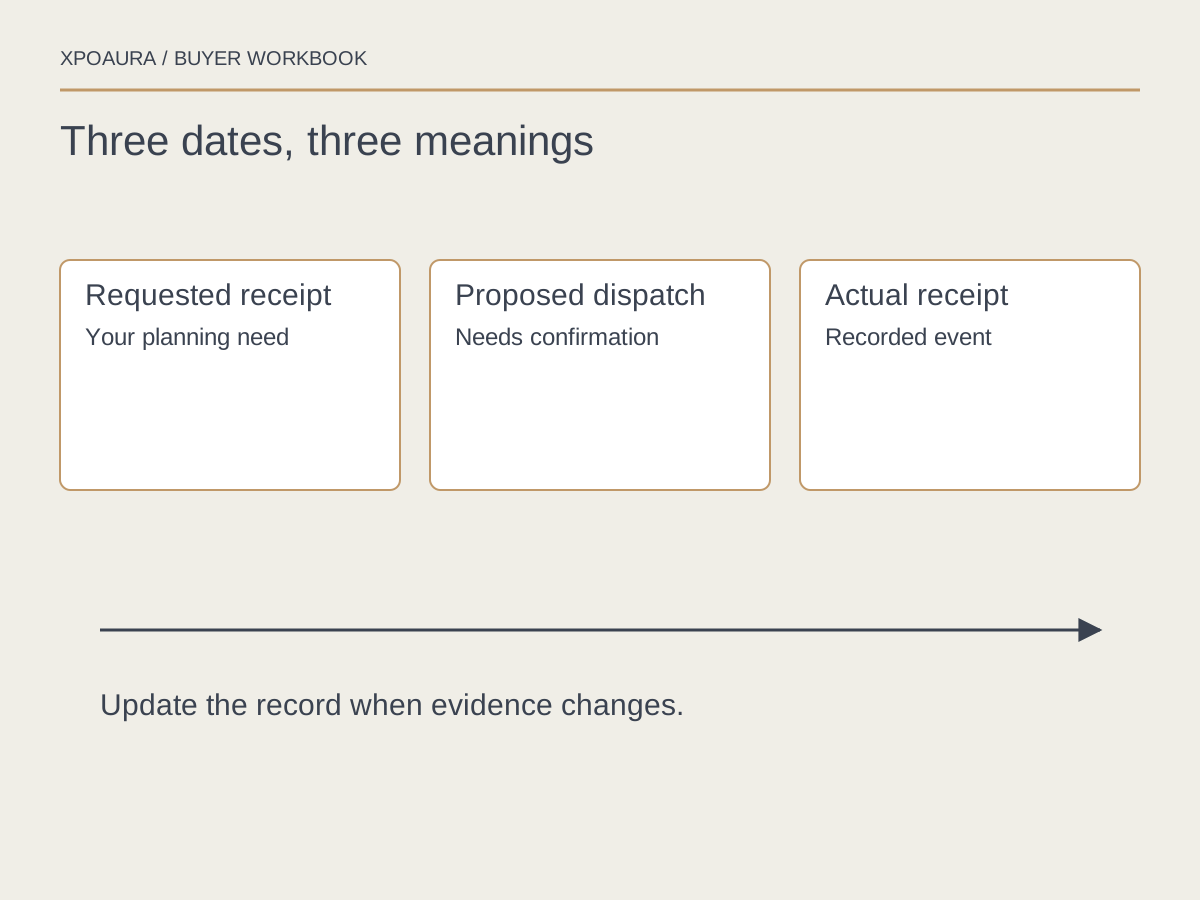
A purchase plan can contain several dates that look interchangeable until someone relies on the wrong one. Your requested receipt date, a proposed dispatch estimate and actual receipt describe different events. Record them separately when discussing an Ayurvedic wholesale order so a planning assumption does not become an unintended promise to your own customers.
This guide does not provide a delivery estimate. It offers a way to organise timing questions for one specific enquiry and to keep later changes visible to the people making purchasing decisions.
Build a small timing record
Start with the enquiry reference and exact product lines. Add the destination and the date you would like to receive the goods. Label that date as requested. Then create separate spaces for the written response, the event it describes and any conditions attached to it. Do not put every date into a single column labelled delivery.
A response may discuss one part of a requirement while another line remains unresolved. Keep timing linked to the affected items and quantities. Avoid copying a date across the whole enquiry merely because it appears near the top of a message. Ask for clarification when the scope of an estimate is unclear.
Make unresolved timing visible internally
Explain which decisions depend on confirmation: placing the order, scheduling receipt or communicating with a trade customer. Give each open question a responsible person and a planned review point. Your internal plan can then show what is provisional without asserting anything about current inventory or production arrangements.
If your preferred timing cannot yet be confirmed, discuss options within your own business. You might defer a line, ask about another proposal for review or revise your requirement. None of these options should be treated as an automatic substitution or a guaranteed service. Record the decision your team actually makes.
Keep the accepted version and later updates
When terms are agreed, retain the relevant written version with the enquiry. Record subsequent timing updates separately with their date and source. A newer message should be checked for what it changes; it should not overwrite the history of the decision without explanation.
At receipt, compare the actual event with the record for your own review. That can identify which questions to ask next time, but one transaction is not evidence of universal delivery performance. Broader transport arrangements are covered in the logistics guide. Here the task is narrower: make the timing statement, its scope and its uncertainty understandable before anyone depends on it.
Your working checklist
A preparation aid, not a qualification score. Choices stay on this page and reset when you leave; nothing is sent or saved.
One question before you continue
Can I use an earlier order’s timing for a new one?
Use it as historical context only. Ask for confirmation for the new products, quantities and destination before relying on a timing assumption.
Put your notes to work
Use the route that matches your buying role. Keep your preparation notes for your own review.
Review wholesale enquiry routes ↗Read wholesale information ↗Basis for this guide
Original buyer preparation method. The linked XpoAura pages provide enquiry and portfolio context. Specific products, documents and terms require current confirmation for your enquiry.