B2B field notes · 05
Batch and Expiry Records: A Receiving Checklist for Trade Buyers
Make one incoming consignment traceable.
On this page
Make one incoming consignment traceable
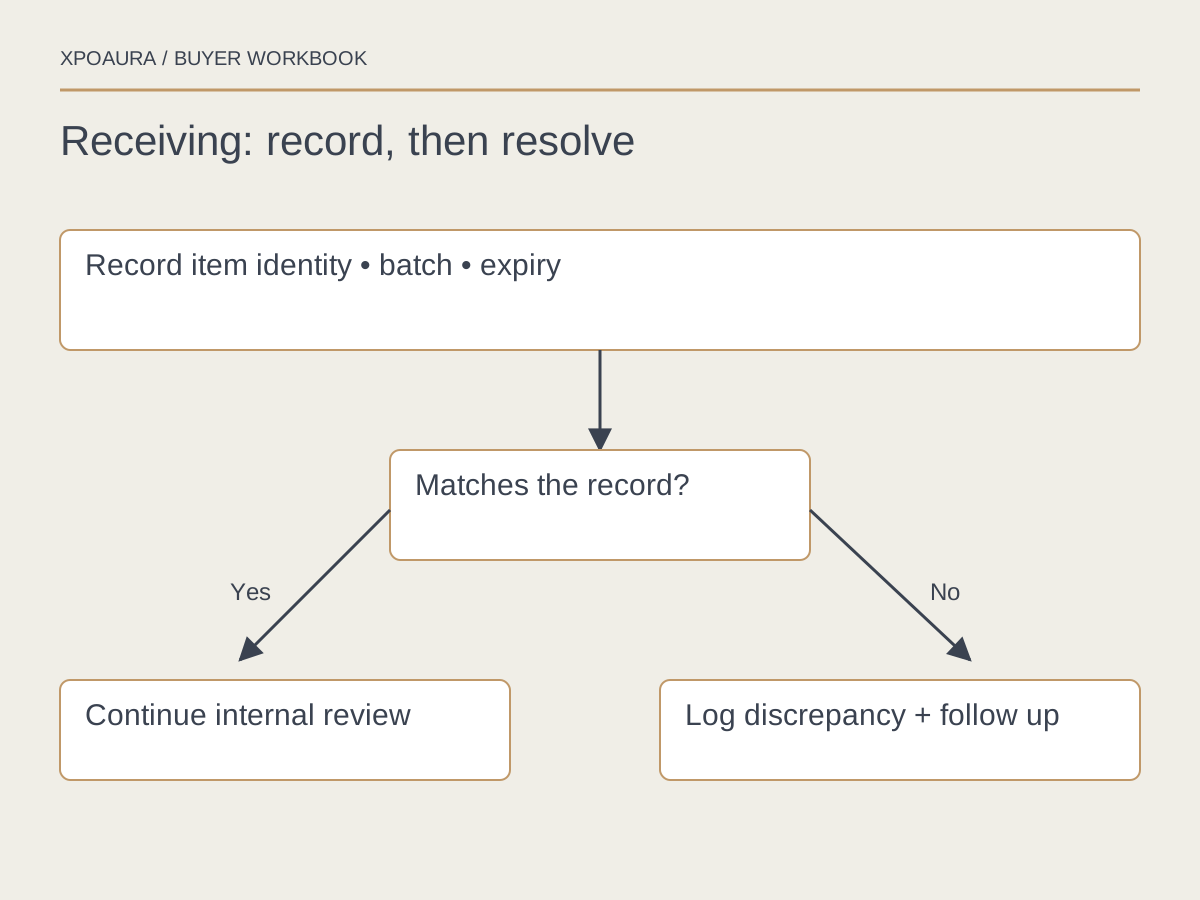
Receiving goods is a distinct moment in the buying process. A purchase request describes what you wanted; a receiving record describes what actually arrived. Bringing those two records together helps your team notice differences before the consignment is mixed into normal stock.
Use this checklist within your own receiving procedure. It is an editorial working aid, not a substitute for the applicable product instructions or your organisation’s authorised quality process. Assign a person to record the check and a separate review owner where your procedure requires one.
Start with identity and quantity
Have the accepted item list available before checking the consignment. Match each product name, preparation and pack to that list. Record the quantity received with its unit. Do not merge similar names or different pack sizes into one total simply to make the count agree.
If an unexpected item is present, record what arrived rather than rewriting the order to match it. Keep a clear difference between the ordered line, the received line and the question raised. This gives the reviewer a concrete discrepancy to resolve instead of a vague note that the shipment was wrong.
Transcribe the printed information carefully
Record batch and expiry details exactly as they appear on the relevant pack. Where a line contains more than one batch, use separate entries. Do not infer an unreadable value from a nearby carton or a previous delivery. Mark it as unclear and request clarification through the agreed contact route.
Inspect condition under your receiving procedure and describe observations plainly. A photograph, where appropriate, should show the relevant product information without exposing unrelated personal or commercial data. The record should distinguish what you observed from what you suspect caused it. Neither a clear photograph nor a tidy spreadsheet establishes product suitability on its own.
Close the discrepancy with a recorded decision
Keep uncertain items subject to your authorised handling procedure while the responsible person reviews the issue. Record the question, date raised, response and decision. Do not assume that reporting a discrepancy automatically creates a return, replacement or credit entitlement; refer to the applicable written terms.
When the review is complete, connect the outcome to the original receiving record. Preserve the original observation even if a later explanation resolves it. This article covers one incoming consignment; ongoing storage management and broader returns administration belong in their separate guides. A complete handover lets the next colleague see what arrived, what was checked and what still needs attention.
Your working checklist
A preparation aid, not a qualification score. Choices stay on this page and reset when you leave; nothing is sent or saved.
One question before you continue
Does this checklist set a minimum remaining shelf life?
No. Confirm the requirement for the specific purchase with your authorised reviewer and written terms; this guide does not set a universal threshold.
Put your notes to work
Use the route that matches your buying role. Keep your preparation notes for your own review.
Review wholesale enquiry routes ↗Read wholesale information ↗Read muniyal ayurveda information ↗Basis for this guide
Original buyer preparation method. The linked XpoAura pages provide enquiry and portfolio context. Specific products, documents and terms require current confirmation for your enquiry.