B2B field notes · 04
Building a First Ayurvedic Pharmacy Assortment from Actual Buyer Needs
Build the first assortment around a real brief.
On this page
Build the first assortment around a real brief
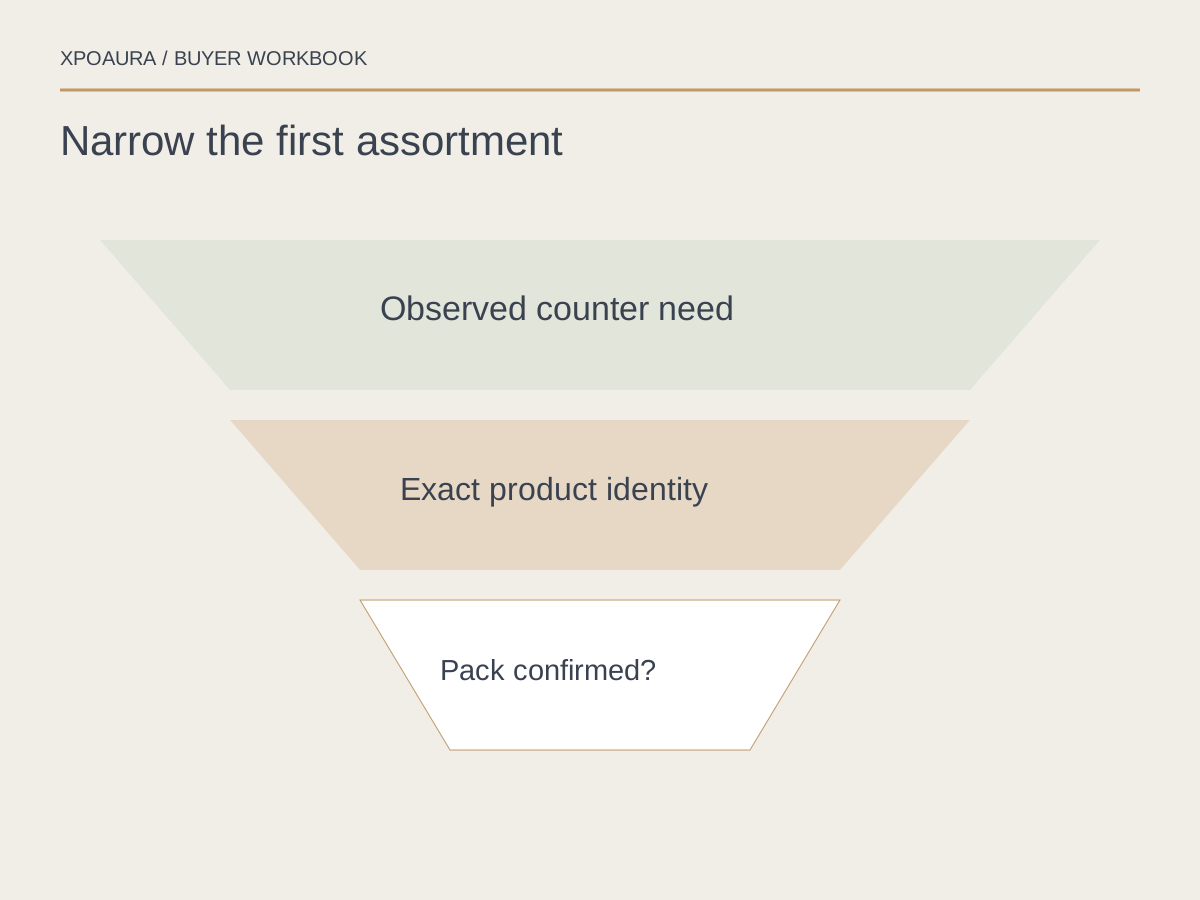
A first pharmacy assortment is easier to review when each proposed line has a reason to be there. Begin with recorded requests, the formats your buying team wants to investigate and the space available for a manageable range. A long catalogue is a source of product identities, not a ready-made stocking plan.
This is an operational shortlist exercise. Product suitability for an individual belongs with the appropriate qualified professional. The worksheet does not recommend treatments, identify bestsellers or predict how quickly a particular product will sell.
Describe the request behind each line
Record the category or exact item being requested and where the request came from within your business. Use aggregate notes rather than patient names or health histories. Separate repeated recorded interest from an occasional question and from your team’s own suggestion. These are useful distinctions even when you do not yet have enough information to estimate demand.
Avoid turning a broad category request into a specific product recommendation without review. If the preparation is unclear, keep the row open. The purpose is to prepare a discussion about a shortlist, not to fill every category with something merely because it appears in a catalogue.
Check practical fit before expanding
For each proposed item, confirm its identity and ask about the current pack. Consider the space and handling arrangements your own team will need to assess. Keep any unanswered storage or label question beside the line so it cannot disappear when the list is shared.
Review how many distinct items the team can check and maintain accurate records for. There is no universal opening assortment or fixed purchase value in this guide. Choose a scope that your business can justify, then ask for the information needed to review it. A small, clearly documented proposal can be expanded after actual experience.
Use a keep, question or defer decision
Give each row one of three outcomes: keep for enquiry, ask a specific question, or defer with a reason. Deferring an item does not mean it is unsuitable; it means your current evidence or operating plan is incomplete. This prevents a tentative idea from silently becoming a purchase instruction.
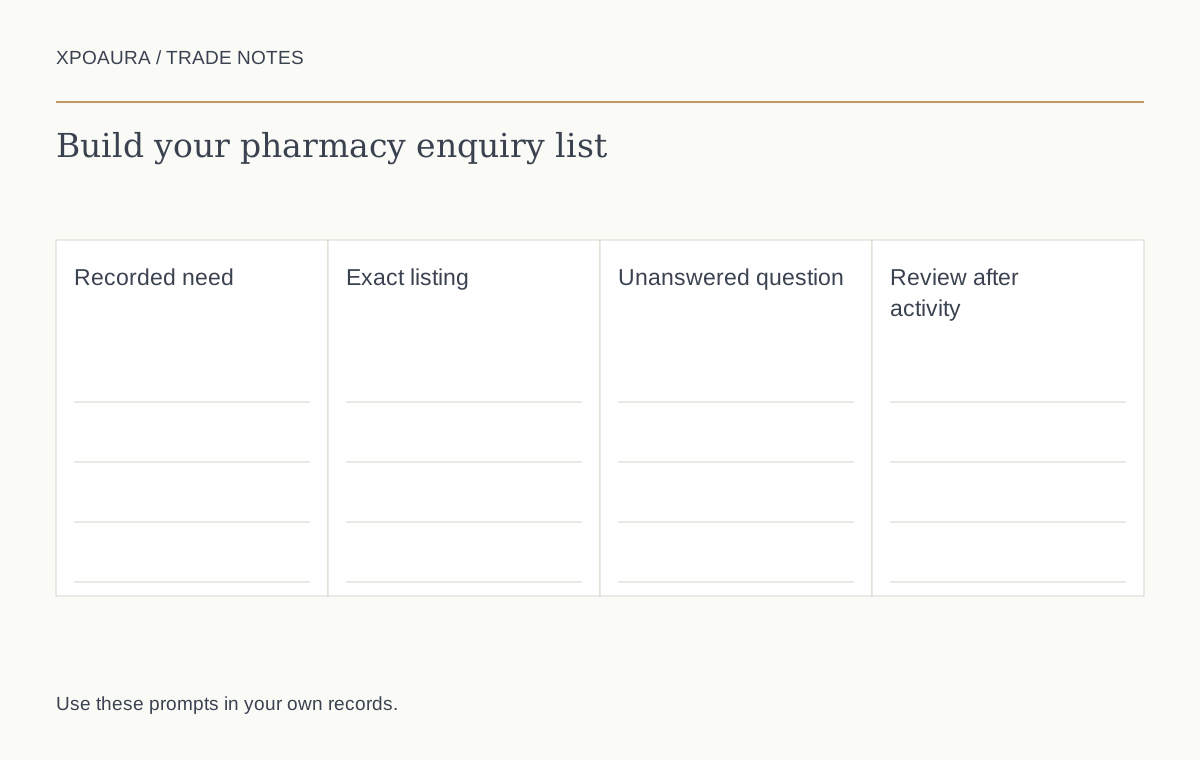
Before sharing the shortlist, read it from a colleague’s perspective. Can they distinguish tablets from another preparation with a similar name? Is quantity expressed in a clear unit? Can they see which pack still needs confirmation? Attach those questions to the pharmacy enquiry and retain your working version for the next review. The existing stocking-list guide provides a broader comparison framework.
Your working checklist
A preparation aid, not a qualification score. Choices stay on this page and reset when you leave; nothing is sent or saved.
One question before you continue
Can a small-town pharmacy use the same worksheet?
Yes. Use your own recorded requirements and operating context. Location alone does not establish demand, an appropriate range or a purchase quantity.
Put your notes to work
Use the route that matches your buying role. Keep your preparation notes for your own review.
Pharmacy enquiry ↗Read for pharmacies information ↗Basis for this guide
Original buyer preparation method. The linked XpoAura pages provide enquiry and portfolio context. Specific products, documents and terms require current confirmation for your enquiry.