B2B field notes · 06
Preparing an Ayurvedic Procurement Document Pack for Hospital Pharmacies
Prepare a document pack your reviewers can use.
On this page
Prepare a document pack your reviewers can use
A hospital pharmacy procurement discussion may involve several people reviewing different parts of the same requirement. One person checks product information, another coordinates purchasing and another receives the approved material. A clear document pack helps those reviews refer to the same version without treating the pack itself as approval.
Begin with your hospital’s actual procurement procedure. This guide offers an organisation method for the buyer’s records; it does not establish a mandatory document list, tender qualification or acceptance by any named institution.
Write the requirement before collecting attachments
Give the proposed purchase a reference and identify the requesting department, intended receiving location and internal review owner. List exact products, preparations, requested packs and quantities. Mark unclear details rather than selecting a plausible value. Keep clinical selection and purchasing administration with their appropriate decision makers.
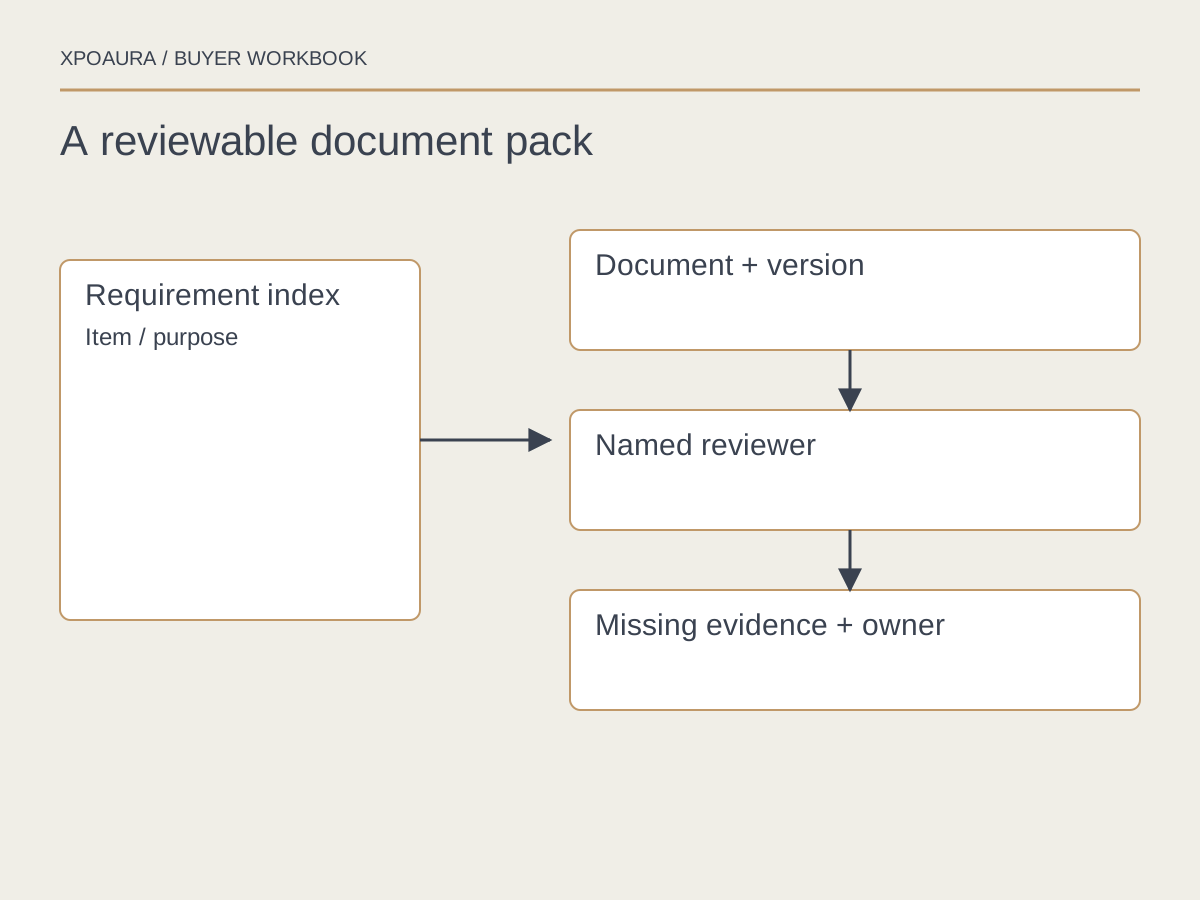
Record the purpose of each document request. If a reviewer needs a particular product document, specify the item and the question it should answer. A folder of unrelated brochures is difficult to review and can create the appearance of completeness while an essential product-specific question remains open.
Use an index with evidence status
Create an index showing the requested document, related item, version or date, source and review status. Useful states include requested, received, clarification needed and reviewed by the responsible person. Receipt is an administrative event; it should not be displayed as technical acceptance.
Keep revised material linked to its earlier version. If a supplier sends an updated pack description, note which item is affected and who needs to revisit it. Avoid replacing files without retaining the decision context. Do not add patient details to a supplier enquiry or include unrelated departmental records merely because they share the same folder.
Prepare a focused follow-up
Before contacting the supplier, group open questions by product or decision. Separate information you need before placing the request from details your own institution must decide internally. Ask about current availability and proposed timing for the identified requirement without assuming the enquiry creates a supply commitment.
At the end of the review, write a short handover note: current version, unresolved questions, next reviewer and what decision is pending. This lets procurement continue without representing a draft pack as an approved order. The hospital supply page provides the appropriate business context; the institutional enquiry route is the place to raise the specific requirement.
Your working checklist
A preparation aid, not a qualification score. Choices stay on this page and reset when you leave; nothing is sent or saved.
One question before you continue
Is this the document list every hospital must use?
No. Your institution’s requirements and applicable professional review govern the list. Adapt this organisation method to that process rather than treating it as a rule.
Put your notes to work
Use the route that matches your buying role. Keep your preparation notes for your own review.
Institutional enquiry ↗Read hospitals information ↗Read institutional enquiry information ↗Basis for this guide
Original buyer preparation method. The linked XpoAura pages provide enquiry and portfolio context. Specific products, documents and terms require current confirmation for your enquiry.