B2B field notes · 07
From Department Request to Supplier Enquiry: Ayurveda College Procurement
Bring departmental requests into one conversation.
On this page
Bring departmental requests into one conversation
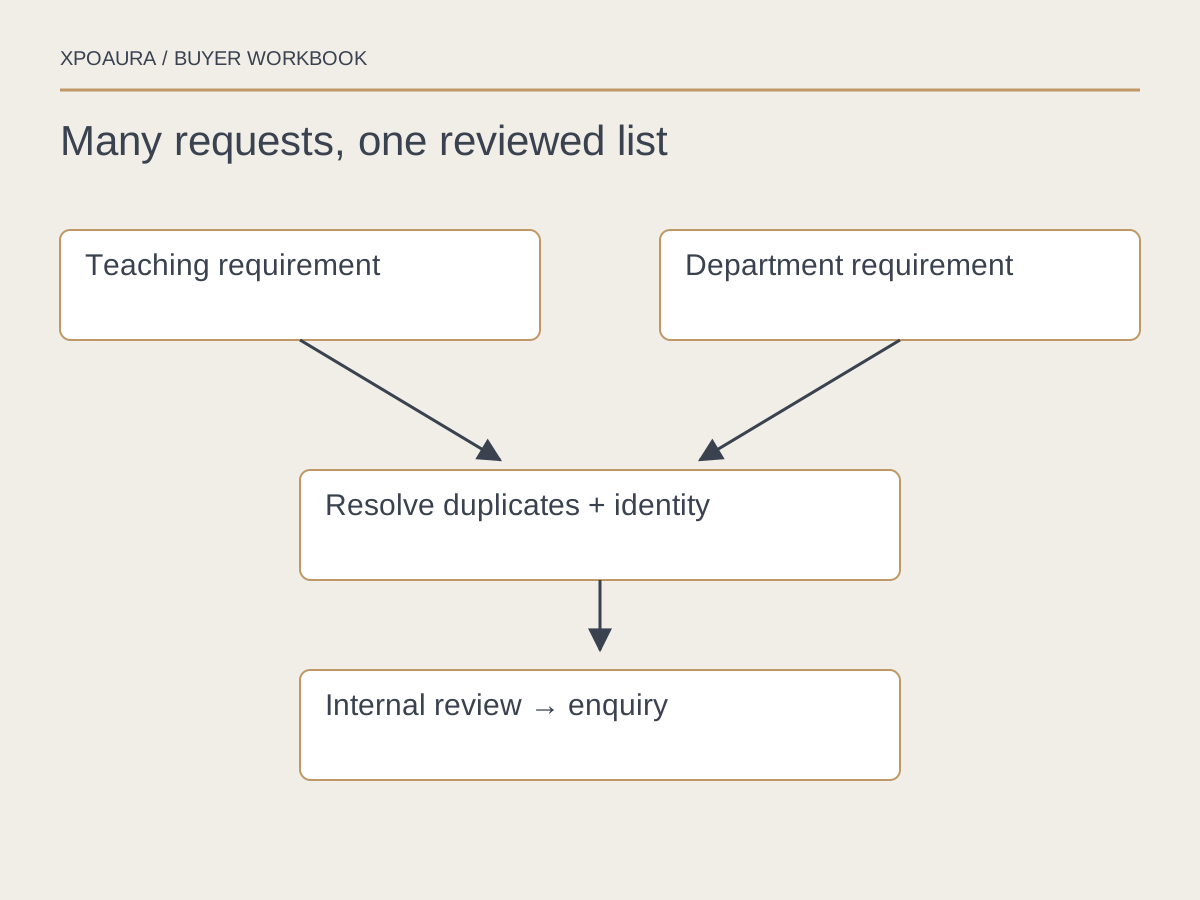
An Ayurveda college may need to reconcile requests from different internal teams before it can ask a supplier a useful question. A department’s initial note and the purchasing team’s consolidated enquiry serve different purposes. Keep a traceable connection between them so clarification does not erase who asked for what.
The workflow below is an illustrative buyer-side method. It is not a statement of any college’s policy, government purchasing rules or XpoAura’s internal operations. Use your institution’s authorised process to decide who reviews, approves and sends the enquiry.
Preserve the original requests
Give each incoming request a local reference. Capture the requesting department, exact item or category under discussion, preparation, requested quantity and intended use within the procurement brief. Where a product identity is unclear, send the question back to the relevant internal reviewer rather than guessing from a similar name.
Keep requests for different preparations separate. Two departments may use shorthand that looks identical but refers to different items. A consolidation sheet should make that ambiguity visible. It should not silently convert several informal descriptions into a single product line.
Consolidate only what can be matched
Combine quantities only after the product, preparation, requested pack and quantity unit have been reconciled. Retain the source request references beside the consolidated line. If the requirements cannot yet be matched, leave them as separate questions. This is a traceability decision, not a claim that bulk purchasing will produce a particular saving.
Ask the authorised purchasing owner to review the intended destination and requested timing. Separate a department’s preferred date from a date confirmed by a supplier. If the requirement changes, update the consolidated version and tell the internal reviewers which lines need another look.
Use a change note when a department revises its request after consolidation. Identify the original line, the requested revision and whether the purchasing owner has reviewed it. This prevents an informal follow-up message from becoming an unnoticed addition to the enquiry. Keep unreviewed changes separate until the responsible person resolves them.
Return the answer to the right reviewer
When a response arrives, match it against the consolidated enquiry and route unresolved questions back to the relevant department. Keep requested, proposed and accepted quantities distinct. Record the version reviewed and the person responsible for the next decision.
The useful outcome is one coherent enquiry with visible internal ownership. It does not replace clinical or academic evaluation and it does not establish procurement approval. Use the Ayurveda college supply page for business context and the institutional form for the final enquiry your team is authorised to send.
An illustrative request workflow
- Step 1 / 5
Collect
Retain each department’s original request and reference.
- Step 2 / 5
Clarify
Resolve ambiguous names, preparations and quantity units.
- Step 3 / 5
Consolidate
Group matching lines while retaining their source references.
- Step 4 / 5
Review
Have the authorised internal owner review the enquiry version.
- Step 5 / 5
Follow up
Return supplier questions to the relevant departmental reviewer.
One question before you continue
Can several departments contribute to one enquiry?
Yes, as an internal preparation method. Preserve each request reference and follow your institution’s approval process before sending a consolidated requirement.
Put your notes to work
Use the route that matches your buying role. Keep your preparation notes for your own review.
Institutional enquiry ↗Read ayurveda colleges information ↗Basis for this guide
Original buyer preparation method. The linked XpoAura pages provide enquiry and portfolio context. Specific products, documents and terms require current confirmation for your enquiry.